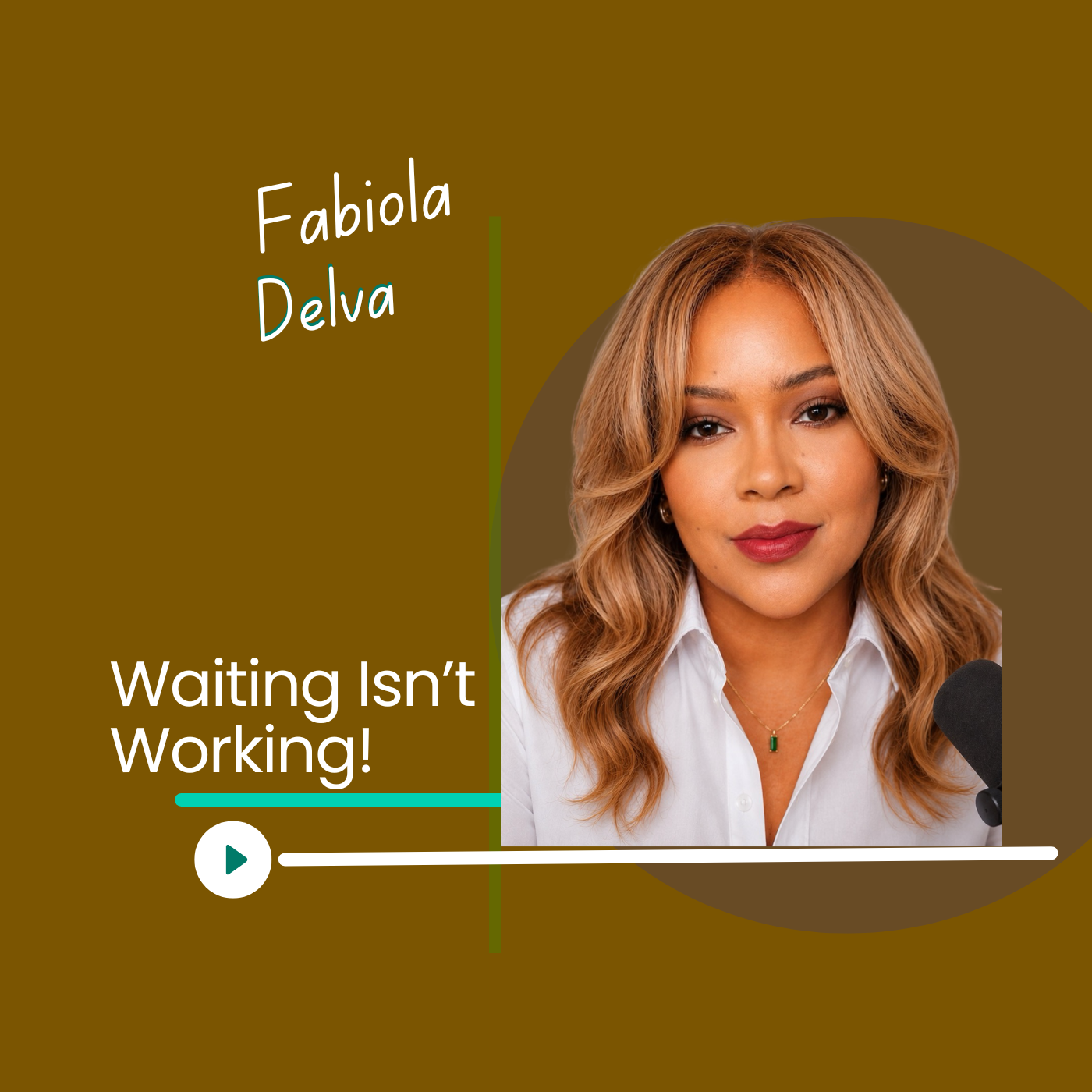
The High Cost of Decision Debt
The Story
The episode explores the impact of unmade decisions on mental well-being and productivity. Fabiola shares personal insights and challenges the audience to take action to address unresolved matters, emphasizing the importance of intentional decision-making.
Takeaways
- Decision debt can have a significant impact on mental well-being and productivity.
- Addressing unresolved decisions with clarity and intentionality can lead to a more focused and productive life.
Chapters
- 00:00 Showing Up Despite Difficulty
- 00:56 Speaking from the Heart
- 03:12 The Weight of Unmade Decisions
- 06:00 Facing Unmade Decisions
- 08:06 The Three Options for Open Decisions
- 13:36 The Challenge
- 15:02 Stop Paying Attention to Unresolved Matters
Fabiola: Hi. Today is not an easy day for me to record, but I'm here because I made a promise to myself that I would keep showing up, Even on the days when showing up takes a little bit more effort. and maybe that is actually the right place to begin today. Because this episode is about the things we keep carrying in our minds when we have not made a decision about them yet. I'm Fabiola, and this is waiting, isn't working. I usually try not to make this podcast sound like a classroom. For a while now I've spoken from the heart and shared pieces of my own story because sometimes it helps to hear that someone else has dealt with the same fear, hesitation, and unfinished plans. But lately, in conversation with colleagues and even complete strangers, Have noticed something. A lot of people already know what's holding them back. They can name the fear. They recognize the procrastination. They know what they've been avoiding. But knowing hasn't necessarily changed what happens next. So today might feel a little more structured than some of our other conversation, and that's intentional. I want to give you something practical, Something you can actually use. A simple way to deal with a decision that stay open in the background, taking off space and pulling at your attention. Because awareness is important, but eventually awareness has to lead somewhere. And that brings me to what I want to talk about today. There are things taking up space in your life that probably aren't task at all. They are a decision you haven't made. When you don't decide, The situation stays open. And because it stays open, your mind just keeps circling back to it. You think about it while you're driving, you think about it when you're trying to focus on work. You remember the second you see someone else doing the exact thing you said you wanted to do. I've been there. It is the most painful thing. you might not actively working on it, but trust me, it's absolutely draining your attention. I call this decision debt. Decision debt is the mental weight that builds up when you keep carrying choices you refuse to make. It doesn't look like massive crisis. Sometimes it's just a message you haven't replied to yet. A class you keep telling yourself you might take. A subscription you've been meaning to cancel. A project that's been sitting, in the exact same phase for months. A relationship you keep evaluating without actually changing anything. or a business idea. You revisit that. every couple of weeks, but never actually test it. Individually, these things seem tiny. But the real problem is the accumulation. When you have too many open decisions, they start fighting for your attention. You end up feeling incredibly mentally busy. Even when you aren't actually getting much done, That is why So many of us at the end of the day, we are so exhausted because we can't point to a single thing we actually finished. now let's be clear on something. There is a huge difference between needing genuine time to make a thoughtful choice and just avoiding a decision. Because you don't want to face the consequences. Sure, some decisions require research. Some require patience. Some depend on information you don't yet have. But many of the decisions we put off aren't waiting for more information. They are waiting for courage. Deep down you probably already know if you want to stop. You know if you need to start. You know the current setup isn't working. And you know exactly what conversation needs to happen next. You might not know how the whole thing plays out, but you know. You know enough to choose a direction. We have to face an unmade decision is still a decision. Usually it's just a decision to let the status grow, keep running. If you don't decide whether to leave, you stay. If you don't decide where to begin, you remain right where you are. If you don't decide to let go of something, you keep carrying it. Doing nothing does not pause the outcome. We think we're buying ourselves time by delaying, but that delay is already actively shaping our lives. So let's make this practical. there are really only three things you can do with an open decision: decide it, schedule it, or delete it. Let's talk about decided. This is for the choices. You already have all the facts. You do not need another week to figure it out. You do not need another week to figure out whether you're going to send that proposal. You don't need another month to know if you're registering for that class. Just make the call. It doesn't have to be perfect. It just has to be the most reasonable choice based on what you know today. That is enough. What about schedule it? Now, some decision actually can't be be made today because you are genuinely waiting on something. maybe you need to review your finances. or a talk with someone else. If that's the case, don't let the decision just float around in your head. Set a date. Write down what information you need and exactly what you will do when it arrives. Tell yourself, I'll review this on August 15th once I have the final cost. I'll make the decision on Friday after I speak with my advisor. I'll give this project 30 more days and then I'll evaluate if it's actually worth keeping. You aren't ignoring the decision. You're giving it a clear structured process. Delete it. Honestly, this is the one we fight the most. A lot of things stay on our list because we love the idea of being the person who does them. We love the idea of writing the book, starting the business, learning the language, reviving that old project, but liking the idea of something is not the same as actually the responsibility of doing it. And it is completely okay to admit that. Be honest. You are allowed to let go of things that don't matter to you anymore. You can stop pretending you're going to get back to them. The intention is to stop caring around choices you have no real intention of ever making. Before you go, I want to give you a quick challenge. Will you do it? Write down five things that have been sitting unresolved. Don't write down your to-do list, just decisions. Ask yourself: should I keep doing this? Should I reply? Should I apply? Should I cancel it? Should I have that conversation? Should I stop giving this my time? Write them down and put each of them in a category. Decided, schedule it, or delete it. By the end of this exercise, every single one of those five items needs a direction. You might not finish this exercise today, but you will stop letting them occupy your mind. That is their goal, not to become a person who makes every decision instantly, but to know the difference between thoughtful consideration and avoidance. Leaving everything open has a real cost. eventually you start looking in that mental fatigue and thinking you just lack discipline. So this week, do me a favor. Stop trying to figure out how to get absolutely everything done. Just look at what's undecided. Choose what stays, decide what goes, and give the rest a date. That is how you stop paying attention to things that are no longer earning a place in your life. I'll talk to you soon. Yeah.
 Apple Podcasts
 Castbox
 Castro
 Goodpods
 Moon FM
 Overcast
 Pocket Casts
 Podbean
 Podcast Addict
 Podcast Republic
 Spotify